Description
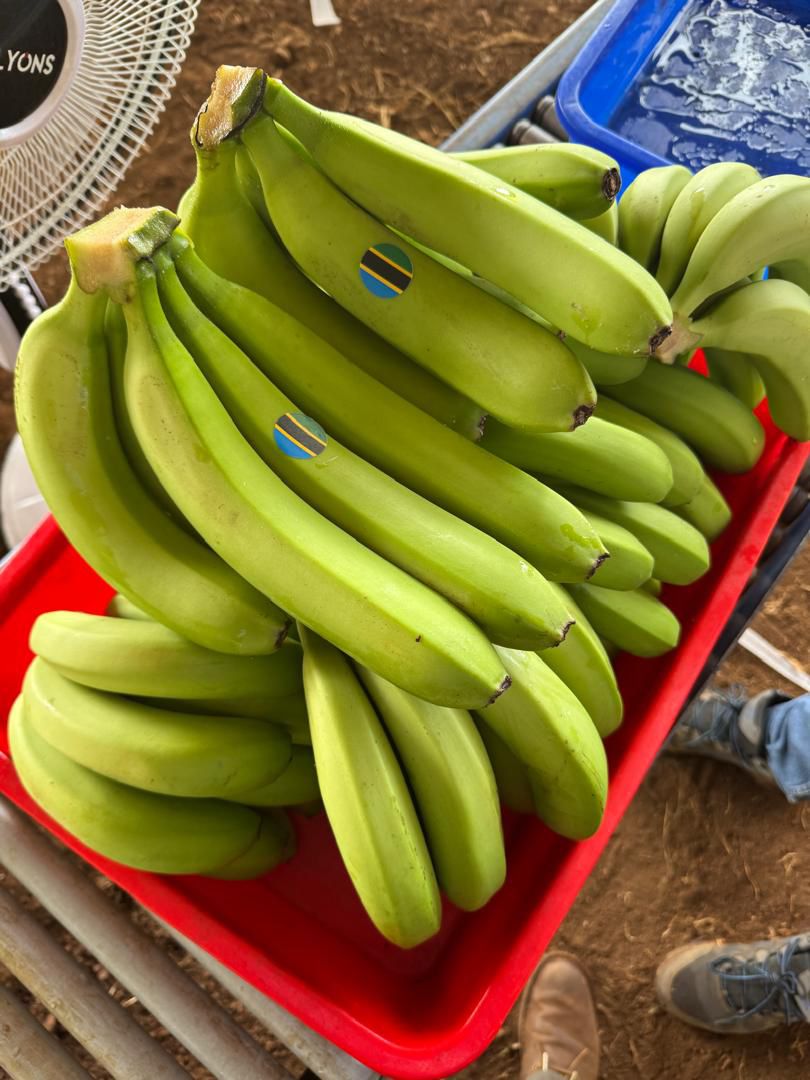
At VG Limited, we supply premium-quality fresh Tanzanian bananas – grown in Tanzania’s fertile regions with optimal tropical conditions. Known for their consistent size, sweet flavor, smooth texture, and excellent shelf life, our bananas are ideal for international retail, wholesale distributors, food service, and processing markets.
What Makes Tanzanian Bananas Exceptional?
Tanzania is one of Africa’s largest banana producers, with the Kagera region (Bukoba) being the traditional heartland of banana production, along with Kilimanjaro, Arusha, Mbeya, and Morogoro regions. The combination of volcanic soils, adequate rainfall, and tropical climate produces bananas with superior flavor, consistent sizing, and excellent shelf life.
The Tanzanian government, through the Tanzania Bureau of Standards (TBS) , has established comprehensive standards for fresh produce to ensure export quality and food safety. Our export program complies with these standards as well as international requirements.
Product Specifications
Based on international export standards and Tanzanian specifications:
| Parameter | Specification |
|---|---|
| Variety | Cavendish (primary export variety) |
| Origin | Tanzania |
| Fruit Length | 18 cm – 24 cm (minimum 7 inches / 18 cm) |
| Color | Bright green when unripe, turning yellow when fully ripe |
| Taste | Sweet and creamy when ripe, smooth texture |
| Grade | Premium Export Grade – Class A |
| Hand Size | 4-5-6 hands (large) / 7-8-9 hands (small) |
| Calibration | Minimum 36 – maximum 47 |
| Fingers per Hand | Minimum 12 fingers per hand |
| Weight per Hand | 1.9 kg – 4.5 kg per hand |
Cooking Banana (Plantain) – Available Upon Request
Tanzania has also established specific standards for cooking bananas (plantains) under AFDC 26 (2447) DTZS, which specifies requirements for bananas grown from Musa spp. to be supplied raw to consumers after preparation. Please inquire for specifications and availability.
Quality Requirements
| Parameter | Specification |
|---|---|
| Physical Damage | Free from cuts, bruises, scars |
| Pest/Disease Damage | Free from visible pest or disease damage |
| Internal Damage | No internal discoloration or bruising |
| Ripeness | Green, mature, ready for controlled ripening |
| Cleanliness | Clean, free from dirt and foreign matter |
✅ Hand-picked and hand-sorted for export quality
✅ GlobalG.A.P. certification available
✅ HACCP standards compliance available
✅ Free from physical damage, bruising, and diseases
Product Features
-
Consistent sizing – Uniform length (18-24 cm) for retail presentation
-
Premium Cavendish variety – Industry standard for international trade
-
Excellent shelf life – Proper cold chain management extends shelf life to 21-28 days
-
Sweet flavor profile – Creamy texture, sweet when ripe
-
Traceable origins – Direct from registered farms in Tanzania’s premium growing regions
-
GlobalG.A.P. certified – Available upon request
Packaging for International Export
Standard Packaging Specifications
The Tanzania Bureau of Standards (TBS) has established detailed guidelines for fresh fruit and vegetable packaging to maintain quality during storage, transportation, and marketing.
| Parameter | Specification |
|---|---|
| Primary Packaging | Corrugated fiberboard boxes (export grade) |
| Standard Carton Sizes | 13.5 kg (most common for sea freight) / 20 kg |
| Box Construction | Ventilated boxes with protective foam or liners |
| Internal Protection | PE foam between layers and box bottom; vacuum-sealed inner plastic bag |
| Cartons per 40ft Container | 1,766 – 1,768 cartons |
| Total Net Weight (40ft) | 22 MT (approx.) |
Carton Details (13.5 kg Standard)
| Parameter | Specification |
|---|---|
| Net Weight | 13.5 kg |
| Gross Weight | 14.5 kg |
| Hand Configuration | 4H, 5H, 6H |
| Calibration Range | 39 – 46 |
| Vacuum Sealing | Inner plastic bag vacuum-sealed |
Box Labeling Requirements (per TBS Guidelines)
Each carton shall be legibly and indelibly marked with:
-
✅ Product name (“Fresh Bananas – Tanzania Origin”)
-
✅ Variety (Cavendish)
-
✅ Grade and size/calibration
-
✅ Net weight (kg)
-
✅ Exporter name and address
-
✅ Batch/traceability code
-
✅ Harvest date and pack date
-
✅ “Keep Refrigerated” / “Store at 12°C – 14°C”
-
✅ Country of origin (Tanzania)
-
✅ GlobalG.A.P. or other certification marks (if applicable)
Cold Chain & Shipping Container Specifications
Maintaining the cold chain is critical for fresh banana exports. The Tanzania Bureau of Standards code of practice for fresh produce packaging and transport emphasizes proper temperature management to maintain quality during transit.
Pre-Shipment Cold Chain Process
| Stage | Temperature | Duration |
|---|---|---|
| Packing Shed | Ambient (shade) | During packing |
| Pre-cooling | 14°C – 15°C | Gradual cooling after packing |
| Cold Storage | 12°C – 14°C | Until dispatch |
| Container Transit | 12°C – 14°C | Throughout voyage |
Container Specifications
Incoterms available: FOB Dar es Salaam Port / CIF any major global port
| Parameter | Specification |
|---|---|
| Container Type | Reefer (Refrigerated) – 40ft RH (High Cube) |
| Temperature Setting | 13°C – 14°C (optimal for green bananas) |
| Relative Humidity | 85% – 90% |
| Fresh Air Exchange | 10–20 cubic meters per hour (ethylene management) |
| Container Pre-cooling | Required before loading |
Container Loading Capacity
| Container Type | Cartons per Container | Net Weight (approx.) |
|---|---|---|
| 20 ft Reefer | 750 – 800 cartons | 10 – 11 MT |
| 40 ft Reefer | 1,760 – 1,770 cartons | 22 – 24 MT |
Container Technical Specifications
| Feature | Detail |
|---|---|
| Container Type | Reefer (Refrigerated) – 40ft RH |
| Temperature | Set at 13°C – 14°C (pulp temperature) |
| Air Circulation | Even distribution around pallets (gap required) |
| Ventilation | 10–20 m³/hour for ethylene removal |
| Pallet Type | Standard 1200 x 1000 mm or 1200 x 1200 mm |
Temperature Management Notes
Based on international best practices and TBS guidelines:
-
Do not load warm fruit – This causes condensation and decay
-
Maintain consistent temperature – Fluctuations cause uneven ripening
-
Monitor throughout transit – Use temperature data loggers
-
Avoid temperatures below 11°C – Chilling injury occurs below 11°C for bananas
-
Avoid temperatures above 16°C – Accelerates ripening, reduces shelf life
Critical Temperature Ranges for Bananas
| Temperature | Effect |
|---|---|
| Below 11°C | Chilling injury – greyish peel, poor ripening |
| 12°C – 14°C | Optimal range for green bananas |
| 14°C – 16°C | Acceptable, shorter shelf life |
| Above 16°C | Accelerated ripening, reduced transit time |
Port of Loading & Transit Times
| Port of Loading | Destination | Approx. Transit Time |
|---|---|---|
| Dar es Salaam | Middle East (Jebel Ali, Dubai) | 12–15 days |
| Dar es Salaam | India (Mumbai/Nhava Sheva) | 12–14 days |
| Dar es Salaam | Europe (Rotterdam) | 25–28 days |
| Dar es Salaam | UK (Felixstowe) | 26–30 days |
| Dar es Salaam | China (Shanghai) | 25–30 days |
| Dar es Salaam | Southeast Asia (Singapore) | 20–25 days |
Note: Lead time from order to shipment: 7–14 days after confirmation.
Shipping Documents Included
-
Commercial Invoice & Packing List
-
Bill of Lading (for sea freight)
-
Phytosanitary Certificate (Tanzania Plant Health Authority)
-
Certificate of Origin (Tanzania Chamber of Commerce)
-
Cold Chain Monitoring Report (temperature data logger)
-
Certificate of Analysis (size grading, quality inspection)
-
Fumigation Certificate (if required)
-
Optional: GlobalG.A.P. Certificate
-
Optional: SGS inspection report
Why Choose VG Limited for Tanzanian Fresh Bananas?
-
Premium growing regions – Direct sourcing from Kagera, Kilimanjaro, Arusha, and Mbeya
-
Premium export grade – Class A, hand-picked and sorted
-
Consistent sizing – Uniform length (18-24 cm) and calibration
-
Cold chain integrity – Packhouse to port temperature management
-
Flexible MOQ – 1 x 40 ft reefer container (approx. 22 MT)
-
Full compliance with EU, Middle East, and Asian import standards
-
TBS compliant packaging – Follows Tanzania Standard AFDC 26 (1773)
-
Reliable logistics from Dar es Salaam port to global destinations